
Home / Insights / Grid Paneling vs. Geometric Paneling
Design vocabulary
Grid Paneling vs. Geometric Paneling
Grid and geometric paneling use many of the same fabrication principles, but they create different types of order. Understanding that difference makes inspiration images easier to evaluate and helps a custom layout begin in the right direction.
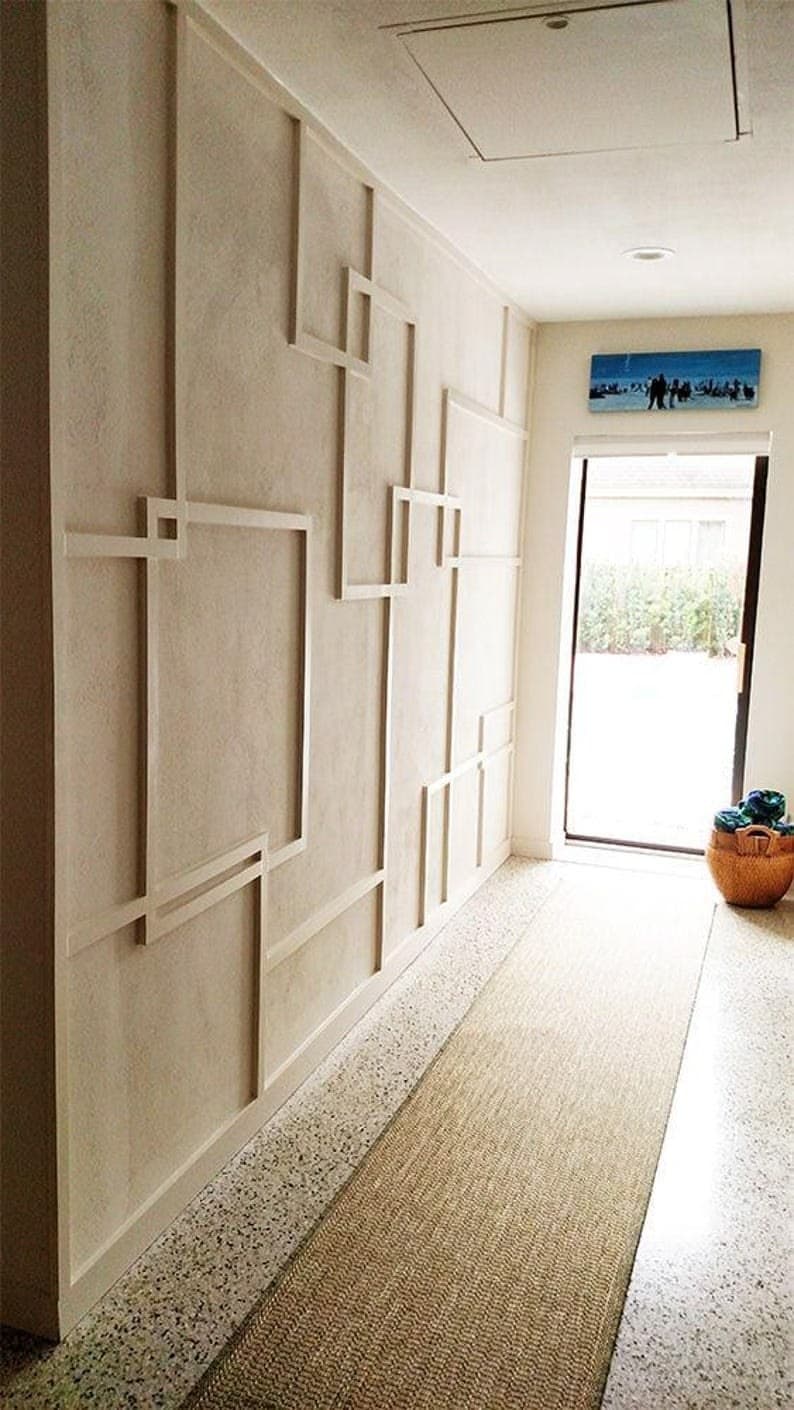
Grid and linear paneling
Grid paneling is organized around vertical and horizontal relationships. It can be perfectly regular or deliberately offset, but it usually creates a calmer architectural framework. It works especially well when the room already has strong rectangular elements such as doors, windows, cabinetry, panel doors, or framed artwork.
- Quiet, structured visual rhythm
- Natural relationship to doors and windows
- Adaptable to picture-frame and modern linework styles
- Often suited to entries, dining rooms, offices, and long corridors
Geometric paneling
Geometric paneling introduces diagonal, intersecting, chevron, or asymmetrical lines. It can direct the eye toward a focal point, energize a large blank wall, or turn an awkward wall shape into an intentional composition.
- More movement and visual energy
- Useful for focal walls and tall volumes
- Can wrap corners or respond to sloped ceilings
- Requires careful control of density and intersections
How to choose between them
Begin with the architecture and the desired mood. A formal or restrained room may benefit from grid-based structure. A contemporary space with a simple furniture plan may support stronger geometry. Tall stairwells often need larger moves that remain legible across multiple levels.
The custom option is often a hybrid
A wall does not need to fit one category. A composition can use a grid to establish order, then introduce a diagonal or dimensional field at the focal point. Wall Haus uses named collections as a shared vocabulary, not as fixed templates.
Continue planning
Bring the room into the conversation.
Photos, approximate dimensions, location, inspiration, and known conditions are enough to start.